In pipe manufacturing, efficiency is everything. Every minute of downtime, every batch of scrap, and every small inconsistency in temperature or pressure affects the bottom line. When your extrusion line runs smoothly, you get higher throughput, lower material costs, and more predictable production schedules. When it doesn’t, small inefficiencies compound into major losses.
Improving extrusion efficiency isn’t just about faster output; it’s about smarter control of your materials, machinery, and processes. Whether you run a small plant or a high-capacity facility, these five practical strategies can help reduce waste and increase productivity across your operation.
1. Optimize Temperature Control
Temperature is the heartbeat of an extrusion line. When it fluctuates, so does the quality of the pipe. A consistent melt temperature ensures uniform wall thickness and prevents warping or surface defects.
Start by calibrating barrel and die heaters regularly and checking for cold spots. Even a small temperature variation can cause uneven flow, forcing operators to make manual adjustments that slow production. Consider upgrading to precision-controlled heating systems with real-time monitoring, allowing you to maintain tighter tolerances and reduce scrap caused by inconsistent melt quality.
2. Maintain Screw and Barrel Integrity
A worn screw or barrel can quietly drain your efficiency. Over time, wear reduces the compression ratio, which affects mixing and melt consistency. The result is lower throughput and higher reject rates.
Routine inspection and preventative maintenance make all the difference. Keep an eye on signs of excessive back pressure, temperature instability, or reduced output at constant speed — all early indicators of wear. Many factories now adopt predictive maintenance programs that use sensor data to track performance and flag issues before they cause costly downtime.
3. Improve Material Handling and Feeding
Poor material handling can cause surges, feed interruptions, and contamination, all of which impact extrusion stability. Make sure raw material is dried to the correct moisture level, particularly with hygroscopic resins. Moisture causes bubbles, voids, and inconsistent dimensions.
Use automated feeding systems that maintain a steady flow rate and include gravimetric controls. This not only improves consistency but also optimizes resin usage. The right feeder calibration can reduce raw material waste by several percentage points per batch — a significant gain over the course of a production run.
4. Monitor Cooling and Calibration Systems
Cooling is where product quality is either locked in or lost. Inefficient cooling tanks, uneven water distribution, or incorrect vacuum settings can cause ovality, shrinkage, or micro-cracking that won’t be obvious until after winding.
Regularly check water flow rates and filter cleanliness, as well as the condition of calibration sleeves and vacuum boxes. Even small blockages can affect dimensional accuracy and slow production speeds. Upgrading to energy-efficient chillers and automated control systems can improve cooling precision and reduce both energy consumption and rework.
5. Invest in Automation and Data Tracking
Automation has changed what’s possible in modern pipe extrusion. Advanced control systems track temperature, pressure, output rate, and material consumption in real time. When integrated with data analytics, this information provides valuable insights that help you fine-tune every stage of production.
Factories using smart automation can detect process drift before it becomes a quality issue, reducing both waste and unplanned downtime. Automated lines also require fewer manual interventions, allowing operators to focus on higher-level process optimization rather than constant adjustments.
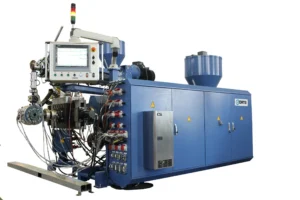
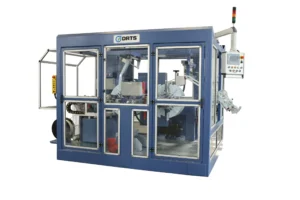
At DRTS, automation isn’t an add-on — it’s built into the design of our extrusion lines. Our control systems give operators full visibility into performance metrics, making it easier to maintain efficiency, reduce material loss, and increase line uptime.
The Bigger Picture
Efficiency isn’t achieved through one change. It’s the result of consistent attention to detail, smart maintenance, and the right technology. Reducing waste in extrusion is as much about discipline as it is about design. When each element — from feed hopper to winder — performs in sync, you get a cleaner process, a better product, and a stronger bottom line.
Manufacturers who invest in optimizing their extrusion lines today will be better equipped to meet growing global demand tomorrow. The technology exists, and so does the opportunity to turn every production hour into a more profitable one.
FAQs
How can I measure the efficiency of my extrusion line?
Efficiency can be tracked using metrics like output rate, scrap percentage, energy use per kilogram of product, and line uptime. Comparing these over time helps identify bottlenecks or areas for improvement.
How often should extrusion line components be serviced?
Preventative maintenance schedules depend on production volume, but critical components such as screws, barrels, and dies should be inspected at least quarterly for signs of wear or buildup.
What’s the best way to reduce material waste?
Consistent feeding, precise temperature control, and automation are key. Monitoring real-time data helps detect issues before material is wasted.
Does upgrading control systems really make a difference?
Yes. Modern automation systems maintain process stability far better than manual control, reducing variability and boosting both product quality and output.
Can older extrusion lines be made more efficient?
Absolutely. Retrofitting older lines with updated control systems, improved feeding mechanisms, and energy-efficient components can deliver major efficiency gains without the need for full replacement.