
Standalone Machinery
Pipe Laser Marking Machine
Permanent, ink-free marking directly onto the pipe — including the colored conduit most laser systems can’t mark cleanly.
DRTS Pipe Laser Marking Machine
DRTS builds in-line laser marking machines for plastic pipe and profile production. The DR-LP Series prints pipe size, SDR, pressure class, date codes, sequential length, standards compliance and your own branding straight onto the pipe surface at line speed — with no ink, no solvents and no consumables to reorder.
Every unit is a complete standalone machine, factory-tested before shipment, and designed to integrate into a line you already have — whoever built it.
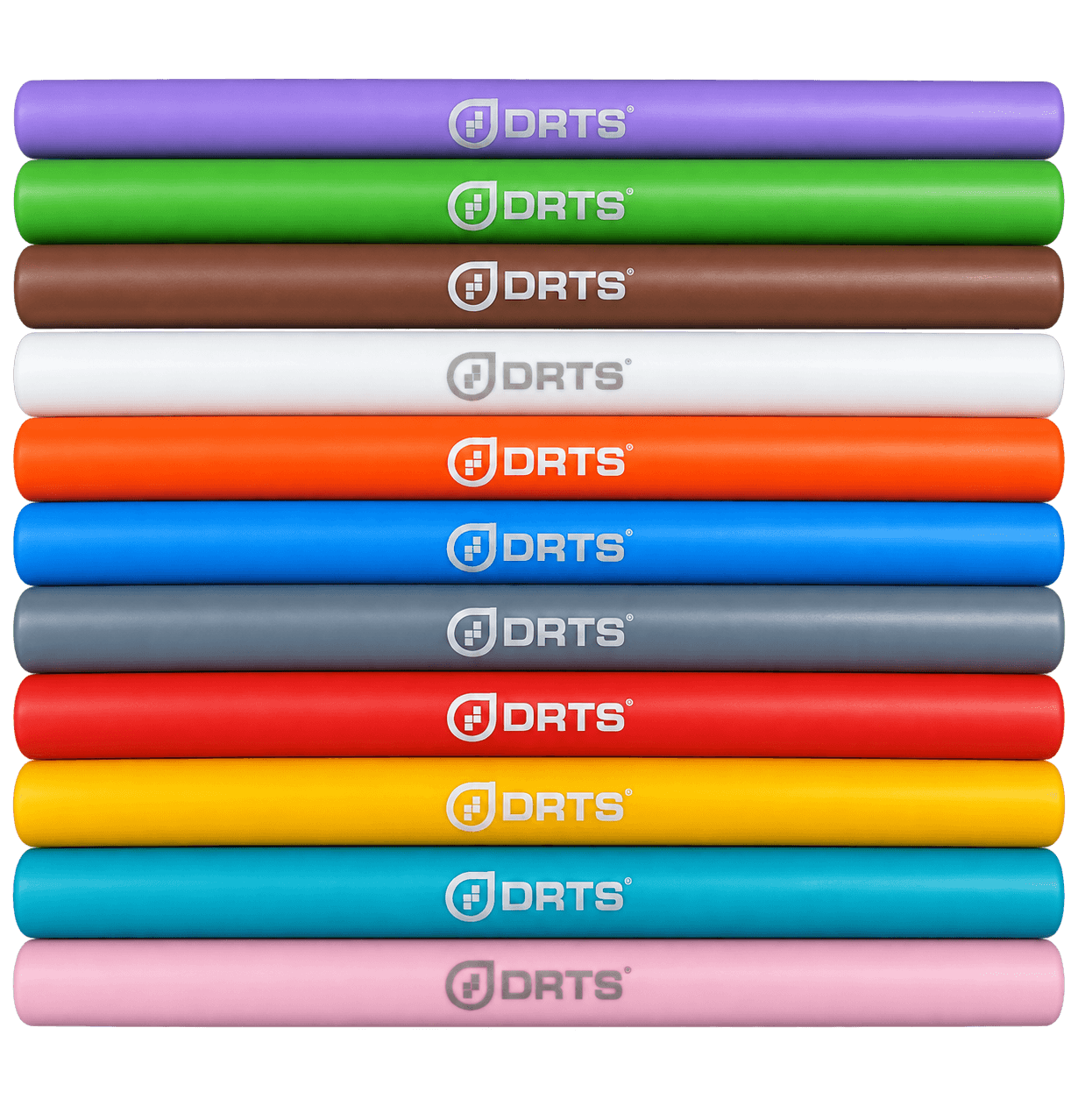
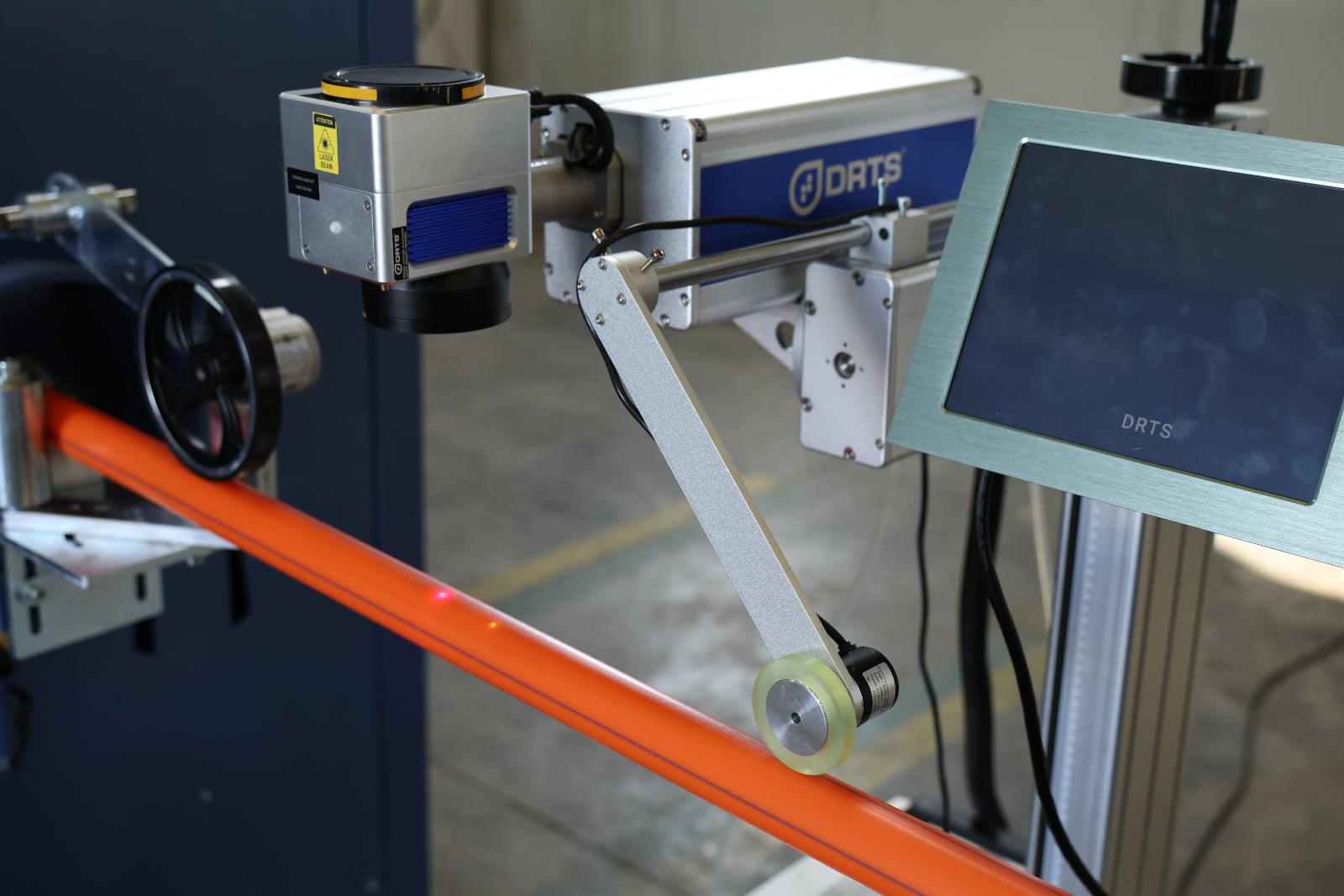
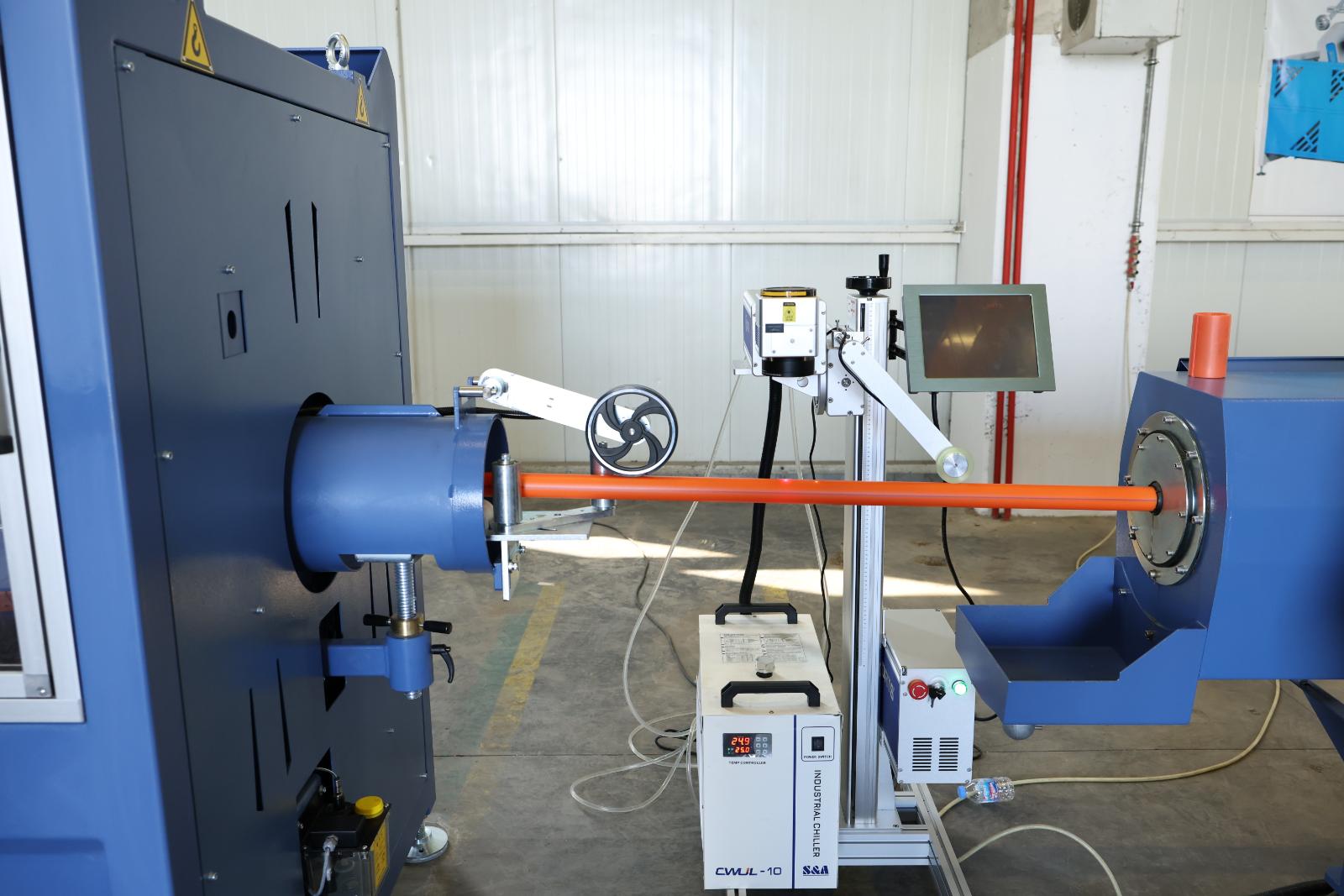
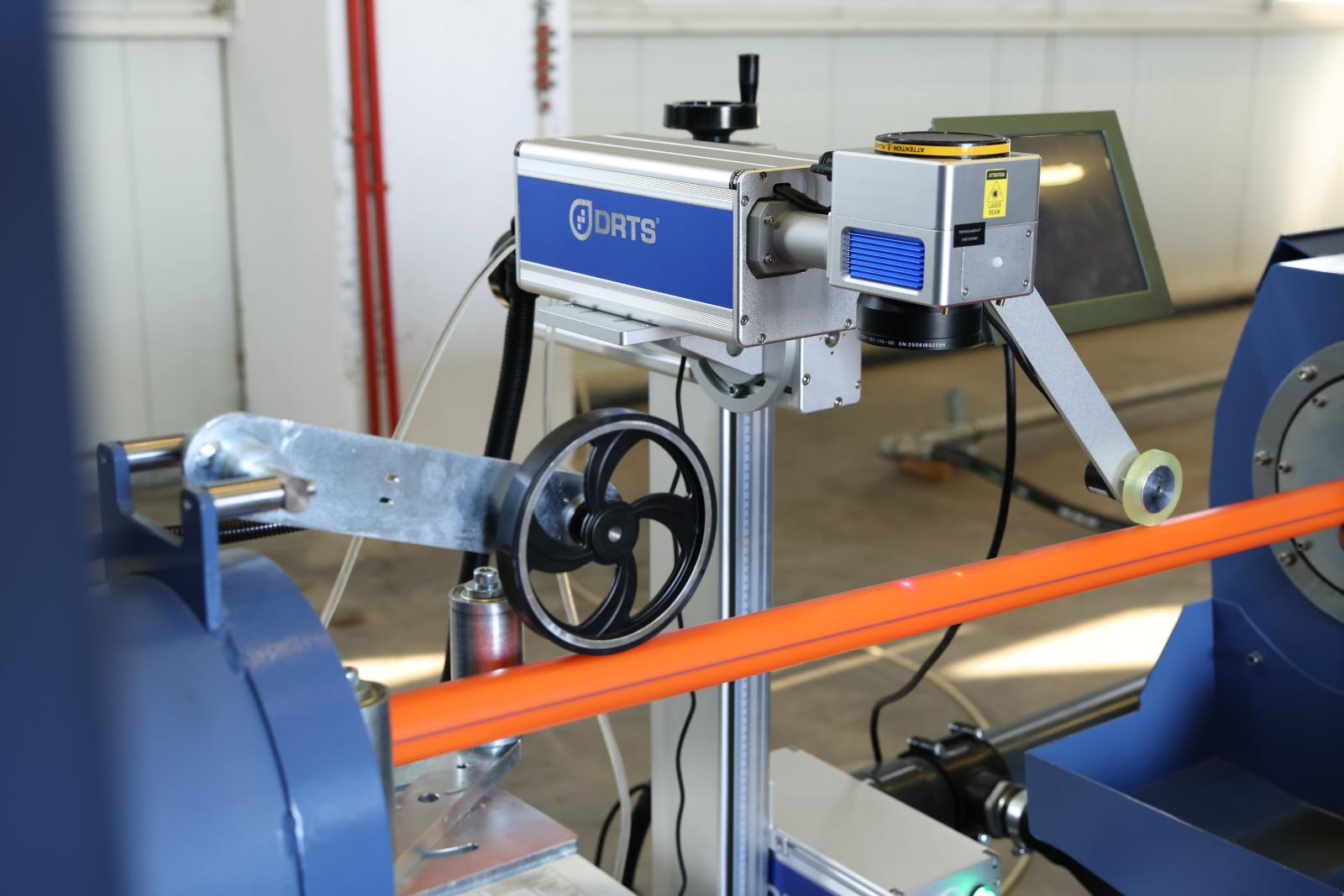
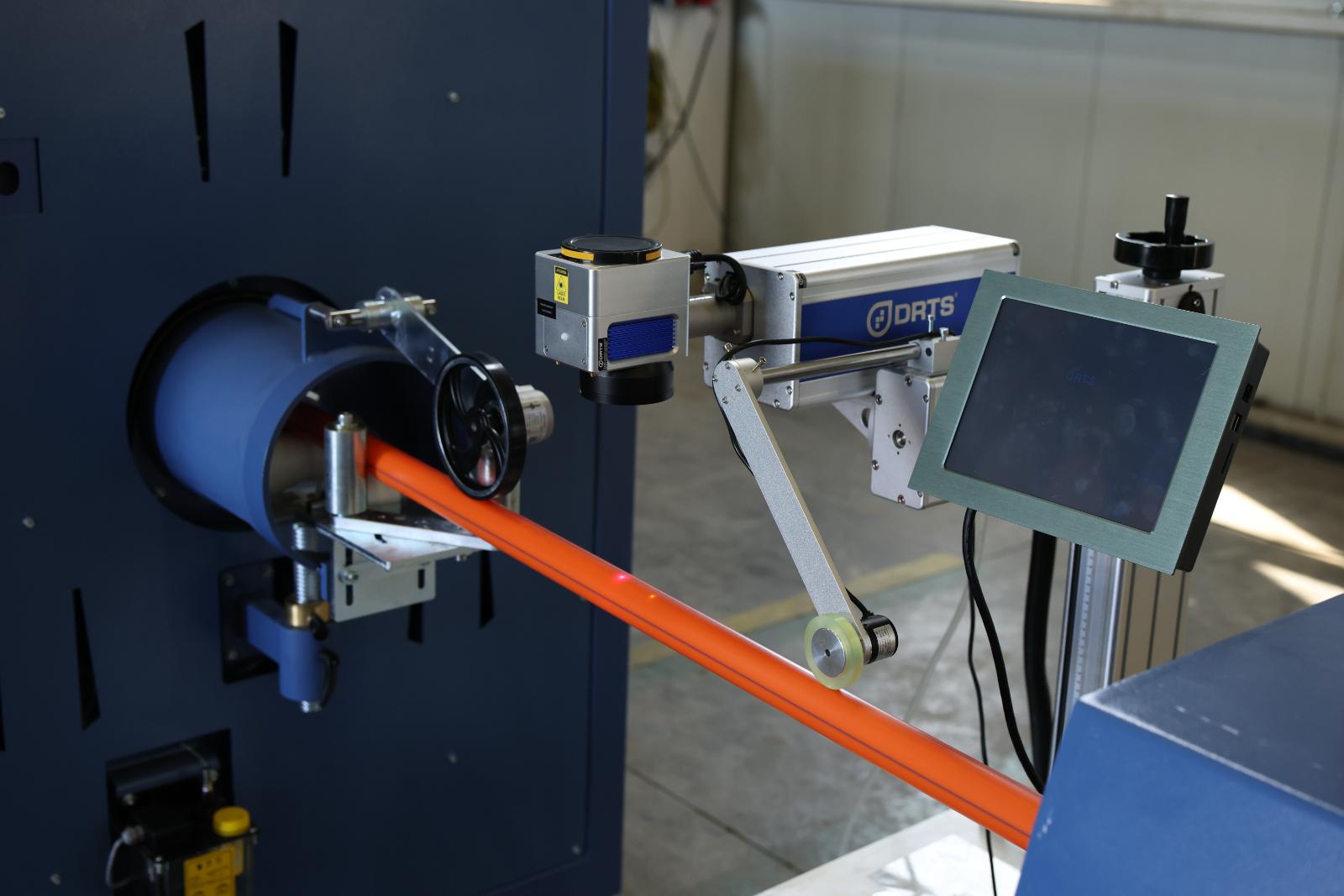

We mark every color of pipe — including orange conduit
DRTS laser marking systems mark every color of plastic pipe — black, white, and the saturated colors that most laser systems cannot mark cleanly, including orange conduit.
That is not the norm in this industry, and it is worth understanding why. A laser doesn’t apply anything to the pipe. The mark is the polymer itself reacting — either carbonizing into a dark residue, or foaming into a pale, opaque layer of microscopic bubbles. Whether that reaction produces sharp contrast depends on three things working together:
- The polymer, the colorant package and the laser wavelength. Marking contrast is a property of all three at once. Two masterbatches of the same color from two suppliers can behave completely differently.
- Where the masterbatch absorbs. Most laser-marking additives are tuned to the near-infrared. A masterbatch formulated for color and weathering rather than for marking may carry no absorber at that wavelength — the laser delivers its energy and almost nothing happens.
- UV stabilizers. The additives that keep buried and exposed conduit from degrading in sunlight also suppress the surface reaction a laser depends on.
Most suppliers treat this as a wall, sell laser for black and white pipe, and default to inkjet the moment color is involved — along with the ink, the solvent, the nozzle maintenance and the ongoing consumable bill. DRTS treats it as a specification problem: we select the wavelength and power against your material, and we prove it on your pipe before you buy.
We match the laser to your material — or the material to your laser
DRTS supplies both UV and fiber laser sources across a range of power levels, because no single configuration is right for every masterbatch.
UV lasers (355 nm) mark photochemically rather than thermally. Instead of heating the surface until it changes, a UV laser breaks molecular bonds directly with light. Two things follow: absorption on plastics is far higher, so UV marks substrates that barely respond to infrared at all; and because very little heat is involved there is no heat-affected zone, so the pipe wall is untouched either side of the character.
Fiber lasers (1064 nm) are the stronger choice where the masterbatch already carries near-infrared absorbers. They run air-cooled, scale to high power for fast lines, and deliver excellent contrast at lower cost per unit.
Choosing between them is not guesswork. Send us a sample of your pipe and we will mark it, on your real production resin, and show you the result before you commit to anything.
Where the current masterbatch is the limiting factor, we will say so — and recommend a formulation change that often lets a lower-powered, lower-cost laser produce exactly the same permanent mark. We would rather sell you the smaller machine that works than the larger one that compensates.
Orange conduit is the hardest common case in the industry. We mark it. Send us a sample and see.
Four configurations, matched to your line
| Model | Laser source | Cooling | Typical use |
|---|---|---|---|
| DR-LP-UV15 | 15W pulsed UV | Integrated water chiller | Colored and light pipe, heat-sensitive materials, masterbatches with no NIR absorber |
| DR-LP-UV30 | 30W pulsed UV | Integrated water chiller | The same, at higher line speeds or on more demanding substrates |
| DR-LP-F30 | 30W pulsed fiber | Air cooled | Masterbatches carrying NIR absorbers; lower running cost |
| DR-LP-F100 | 100W pulsed fiber | Air cooled | High-speed lines and multi-line installations |
Running cost estimator
What is your line spending on ink?
Inkjet consumables are bought continuously for the life of the line. Enter your own numbers to see what that comes to in a year.
- Printed legends
- —per year
- Pipe marked
- —per year
- Ink
- —liters per year
- Make-up fluid
- —liters per year
Difference, per year
—
Before counting downtime, nozzle maintenance or solvent handling.
How this is calculated. Make-up fluid consumption uses the rate published in continuous inkjet specifications, applied to every hour the printer is powered, since the fluid evaporates from the ink recirculation system whether or not the line is printing. Ink consumption uses the published industry range for small-character coding. Prices default to aftermarket consumable rates; original-manufacturer cartridges typically cost more. Figures are an estimate for comparison, not a quotation. Your own consumable invoices are the better number, and we are happy to work from them.
Every system comes complete — ready to run
- Moving marking system — the head tracks the pipe so characters stay sharp at line speed, with no smearing or distortion
- F-Theta lens — even focus and consistent character height across the full marking field
- Pilot laser — previews mark position before you print, so setup is right first time
- Manual Z and Y axis positioning — aligns the marking field to pipe diameter and line height
- Touch-panel control with LaserCad software for fast job setup and changeovers
- Encoder-driven line-speed tracking so character spacing holds as the line speeds up or slows down
Options: extended mast for larger diameters · extended encoder cable for remote mounting · lens options to suit your marking field
Components are globally available brands — no proprietary bottlenecks.
Print every standard requirement — plus your own branding
Pipe size · SDR · pressure class · material designation · date and time codes · shift and batch codes · sequential length marking · standards compliance (DIN, ASTM, AS/NZS and others) · barcodes and data matrix · company logo and branding.
Markings are permanent and part of the pipe surface — resistant to abrasion, chemicals, UV and handling. They cannot be rubbed off in the trench, which matters on pipe expected to stay identifiable for fifty years or more.
What changes when the ink goes away
| Laser marking | Inkjet | |
|---|---|---|
| Consumables | None | Ink, solvent, make-up fluid, ongoing |
| Maintenance | No nozzles to clog or clean | Daily nozzle and head maintenance |
| Permanence | Part of the pipe surface | Surface-applied, can abrade or solvent off |
| Downtime | Minimal | Printhead cleaning, ink changeovers |
| Running cost | Power only | Consumables scale with every metre produced |
* Assumes one line at 100 ft/min marking every 36 in, 8,000 running hours a year. Make-up fluid consumption from published continuous inkjet specifications; ink and fluid priced at aftermarket rates — original-manufacturer cartridges run higher. Laser figure is a 0.5 kW system at $0.09/kWh.
The trade-off has always been described as inkjet for color, laser for black and white. That assumption is where DRTS has spent its development effort — and on your pipe, we’d rather prove it than argue it.
A marking head is not a pipe marking machine
General-purpose industrial laser markers are excellent instruments, and you will find them in plants across every industry. They are designed to mark a part that is held still, or moved past on a conveyor.
A pipe line is a different problem. The product never stops, the diameter changes between jobs, the marking position has to follow the line height, and the character spacing has to stay correct whether the line is running at full speed or ramping. Meeting that takes more than a marking head — it takes the stand, the moving marking carriage, the encoder riding on the pipe, the cooling, the guarding and the integration with the haul-off.
With a general-purpose marker, somebody still has to build all of that: your maintenance team, or an integrator, as a separate project with separate accountability. DRTS builds complete production lines for plastic pipe and profile — so a DR-LP system doesn’t arrive as a marking head and a parts list. It arrives as one complete machine, factory-tested and ready to run, from the company that also builds the line it goes into.
It goes on the line you already have
Not only does DRTS sell complete production lines — we also sell individual machines that can be integrated into any existing line, regardless of manufacturer.
A laser marking machine is one of the easiest additions to make. It needs a mounting position, a power supply and an encoder signal from the line. It does not care who built your extruder, your haul-off or your cooling tank.
For many producers it is also the smallest way to start working with us — a single machine, commissioned and supported, before any larger conversation about the rest of the line.
And after it ships
- Remote support within 24 hours
- Direct access to our engineering team
- Spare parts stocked locally — most ship within 24 hours
- US-based sales, support and service
Every machine ships production-ready after a full Factory Acceptance Test. DRTS technicians install, commission and optimize the system on site, and train your team to run it.
Frequently Asked Questions
Can a laser mark colored pipe?
Yes, but not every laser and not every masterbatch. Marking contrast depends on the polymer, the colorant package and the laser wavelength working together, so the only reliable answer comes from testing your actual production resin. DRTS supplies both UV and fiber sources specifically so the machine can be matched to your material — including orange conduit. Send us a sample and we will mark it before you commit.
Why is orange conduit hard to laser mark?
Because the pigment, not the laser, decides the result. A laser mark is either carbonised dark or foamed pale, and against saturated orange both can read as low contrast. Conduit masterbatches are formulated for colour and weathering rather than for marking, so they often contain no near-infrared absorber for a fiber laser to work with, and the UV stabilisers that protect the pipe outdoors also suppress the surface reaction the mark depends on. The fix is to match the wavelength to the masterbatch — or change the masterbatch.
What is the difference between a UV and a fiber laser for pipe marking?
A fiber laser at 1064 nm marks thermally and works best where the masterbatch contains nearinfrared absorbers. A UV laser at 355 nm breaks molecular bonds photochemically rather than with heat, giving much higher absorption on plastics and no heat-affected zone — which is what makes it effective on materials a fiber laser struggles with.
We already have a laser marker. Can we use it on our pipe line?
Possibly, but the marking head is the easy part. In-line pipe marking needs the head to track the pipe, an encoder tied to line speed so character spacing holds, positioning for diameter and line height, cooling, guarding and integration with the haul-off. If you have a marker and the engineering resource to build the machine around it, it can be done. The DR-LP Series is that machine, supplied complete.
Will it keep up with my line speed?
Yes. The marking head moves with the pipe and takes its reference from a line encoder, so character quality and spacing hold as line speed changes. Power level is selected against your line speed when the machine is specified.
Can I add a laser marker to a line that isn’t DRTS?
Yes. Every DRTS machine is available standalone. A pipe laser marking machine needs a mounting position, power and an encoder signal — nothing more.
What does it cost to run?
Electricity. There is no ink, no solvent, no make-up fluid and no nozzle consumables, which is where the running-cost difference against inkjet comes from.
What marking standards can it meet?
The machine prints whatever your standard requires — size, SDR, pressure class, material, date and batch codes, sequential length and standards references — along with your own branding, barcodes and data matrix codes.
Send us your pipe. We’ll mark it.
The fastest way to find out whether laser marking works on your material is to let us try it. Send a sample of your production pipe and we will return it marked, with the configuration that produced the result.
Contact Us Now
DRTS Turkey Office
Folkart Towers A Block,
Adalet Mahallesi, Manas Bulvarı,
Kat: 32, No: 09, D: 3209,
Bayraklı, İzmir, 35530,
Turkey
DRTS USA Office
329 US-202,
Pomona,
New York 10970
Dubai Office
DRTS LTD
Office 1509 Citadel Tower
Business Bay PO box 377310
Dubai, UAE
Phone Number
+1 (858) 412-0133 | +90 (232) 877 24 32
Email Address
info@drts-corp.com
"*" indicates required fields