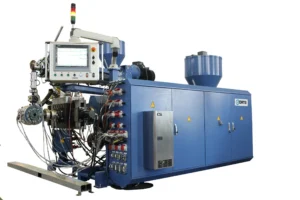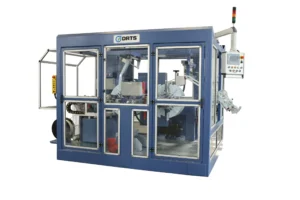
Choosing a pipe extruder is not a brochure decision. It is a long-term operational decision that affects output, quality, downtime, energy use, staffing, and ultimately profit. Get it right, and your production line runs predictably for years. Get it wrong, and you spend that same time firefighting problems that never quite go away.
At DRTS, we see manufacturers come to us at very different stages. Some are setting up a new plant from scratch. Others are scaling production or replacing ageing equipment that has become unreliable. The principles for choosing the right pipe extruder are the same in every case. Start with your production reality, not the machine spec sheet.
Start With the Pipe You Need to Produce
The most common mistake is choosing an extruder first and a pipe later. The correct approach is the opposite.
You need clarity on pipe material, diameter range, wall thickness, pressure class, and end use. A pipe designed for potable water has different requirements to a drainage pipe. A pressure pipe demands tighter tolerances than a non pressure application.
Material choice matters just as much. PVC, HDPE, LDPE, PPR and multilayer pipes all behave differently during extrusion. Melt temperature, viscosity, cooling behaviour and line speed must be matched correctly. One extruder does not suit every material equally well.
If you are not completely clear on your pipe specification, any extruder selection is guesswork.
Understand Your Required Output and Throughput
Production targets should drive extruder sizing, not ambition.
Be realistic about the output you need per hour and per shift. Oversizing an extruder can be as problematic as undersizing. Running a large extruder at low load often leads to unstable melt flow, higher energy consumption and inconsistent pipe quality.
A correctly sized extruder running within its optimal operating window will deliver better consistency, lower wear, and more predictable output over time.
Think in terms of sustained production, not maximum advertised throughput.
Single Screw or Twin Screw Decision
This is a critical choice and depends heavily on material and process stability requirements.
Single screw extruders are widely used for polyethylene pipes and are valued for their simplicity, efficiency and ease of maintenance. They are well suited for stable, high volume production.
Twin screw extruders are often preferred for PVC pipe extrusion due to better mixing, temperature control and material handling. They offer greater process stability where formulation consistency is critical.
The wrong screw configuration will limit quality no matter how advanced the rest of the line is.
Line Integration Matters More Than the Extruder Alone
A pipe extruder does not work in isolation. It is part of a system.
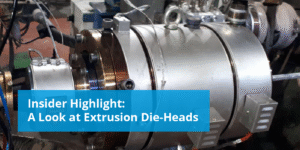
The die head, vacuum calibration, cooling tanks, haul off units and cutting systems must all be matched to the extruder output and pipe specification. Mismatched components lead to ovality, wall thickness variation and surface defects.
When choosing an extruder, consider how it integrates with the complete production line. Turnkey systems reduce risk because the entire line is designed to work as one.
Quality Control and Tolerance Expectations
If your market demands tight tolerances, your extruder and downstream equipment must support that consistently.
Stable melt pressure, precise temperature control and smooth output are non negotiable. Inline quality control systems can further reduce risk by identifying issues before they become costly waste.
An extruder that delivers high output but poor consistency will cost more in rejected product than it ever saves in speed.
Energy Efficiency and Operating Costs
Energy consumption is not a secondary concern. It directly affects your cost per metre of pipe.
Modern extruders are designed with efficient motors, optimised screw geometry and intelligent control systems. Over the lifespan of the machine, these efficiencies add up to significant savings.
Ask about energy consumption at real world operating conditions, not theoretical maximums.
Maintenance, Reliability and Support
Downtime is expensive. Spare parts availability, service access and technical support should influence your decision as much as machine performance.
A robust extruder design with proven components will always outperform a complex system that looks impressive but fails under continuous production.
Long term reliability is built into the design, not added later.
Plan for Future Growth
Many manufacturers outgrow their first extrusion line faster than expected.
Consider whether the extruder can handle future diameter ranges, higher output or different materials. Modular designs and scalable systems offer flexibility without forcing a full replacement later.
Choosing with growth in mind protects your investment.
Making the Right Decision
The right pipe extruder is the one that matches your product, your output goals, your quality standards and your operational reality.
It is not about buying the biggest machine or the cheapest option. It is about building a production line that runs reliably, produces consistent quality and supports your business for years to come.
An experienced partner will help you challenge assumptions, identify risks early and choose a solution that actually works on the factory floor.
FAQs
Q: How do I know what size extruder I need?
Extruder size depends on material type, pipe diameter, wall thickness and required output. A detailed production analysis is essential before selecting a size.
Q: Is a larger extruder always better for higher output?
No. Oversized extruders can lead to instability and higher energy costs if they are not run within their optimal operating range.
Q: Can one extruder produce multiple pipe sizes?
Yes, within limits. Changing pipe diameters usually involves changing dies and recalibrating downstream equipment. The extruder must be suitable for the full range.
Q: What is the difference between single screw and twin screw extruders?
Single screw extruders are typically used for polyethylene materials. Twin screw extruders are often used for PVC due to better mixing and temperature control.
Q: How important is the die head in pipe extrusion?
The die head is critical. Poor die design will compromise pipe quality regardless of extruder performance.
Q: How long does a pipe extruder typically last?
With proper maintenance, a well built pipe extruder can operate reliably for many years. Longevity depends on design, operating conditions and maintenance practices.
Q: Should I buy a standalone extruder or a complete line?
A complete line reduces integration risk and ensures all components are matched. Standalone extruders require careful system design.
Q: How much downtime should I expect for maintenance?
Routine maintenance is minimal when systems are properly designed. Unplanned downtime is usually linked to poor matching or inadequate support.