As new irrigation technology becomes increasingly common, manufacturers will need to stay aware of these trends and upgrade their equipment to keep up with customer demand. Drip irrigation pipe must still be produced in an efficient manner and will need to operate with smart systems. Further, manufacturers will face the challenge of educating consumers about the advantages of new technology and how this technology helps reduce their costs.
Increasing production of crops while minimizing water use is key to operations that want to be both cost effective and environmentally friendly. Water is a critical resource and its preservation requires irrigation systems to optimize their approach. Smart irrigation system design must take into account not only the plants being treated and the amount of water and fertilizer they need, but also the climate of the area, the current and forecasted weather, ground water levels, the current growth stage of the plants, and more.
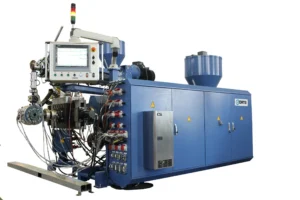
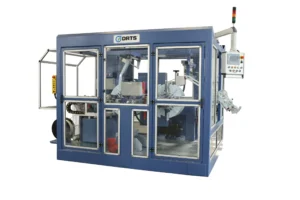
Minimizing resources is also a concern for manufacturers, who are looking for ways to reduce costs of raw materials and energy usage while still producing the same level of product. Advances in dripping technology also allow manufacturers to meet their goals by combining different polymers in their hose and using more efficient machinery. These advances allow manufacturers to meet increased demands for drip irrigation which still keeping operating costs reasonable.
Fresh water supply is a constant variable, especially good quality water that can be used for drinking and irrigation purposes. Therefore, this resource will need to be deployed and used wisely to meet increasing demands for production. Worldwide, irrigation accounts for 4/5 of the total consumption of freshwater. This demand is particularly high in semi-arid and arid areas where the water supply is lower. As such, its use has shaped the legal and regulatory environment generating significant local laws over water consumption and treatment. Water scarcity also has an effect on local culture where expectations of lawns and leisure water availability are reduced and people are accustomed to an arid landscape.
Geneticists have for years worked to develop crops that require less water while being tolerant to climatic changes such as cold, pests, salinity, and drought. These hardier plants are designed to produce top yields while requiring less water and fertilizer. However, these changes are minor compared to advancements currently being made in irrigation technology.
Many of these changes go beyond drip irrigation system planning and require taking into account the whole agricultural operation in order to minimize use of water and other resources. With GPS precision, mobile irrigation systems can self-propel to locations where they are needed and crop managers, at the touch of a button, can deploy their resources as appropriate. Smart technologies such as soil sensors can also account for evaporation as it occurs under different weather systems to prevent errors and overwatering that can occur when it is incorrectly calculated.
New drip irrigation technology is also becoming readily available that will allow the integration of additional water sources into the system. While incorporating grey water may initially require additional plumbing, storage, and filtering, it represents a volume of water that is both usable and largely untapped in irrigation currently.
Reducing water used and introducing additional sources of water into the system will require upfront investment in new equipment and technologies designed to handle these changes. However, this investment will result in a lower operating cost as water use is reduced and crop problems can be addressed in a targeted fashion, increasing the per-acre yield. Each agricultural area will require a different solution that is driven not only by the crop type, but also by soil, climate, water supply, and economics.
As customers upgrade their irrigation infrastructure, manufacturers will need to upgrade their equipment to keep up with production of supplies while continuing to sell in a cost-effective manner. Smart systems require smart managers and educated suppliers who can help their customers keep on top of the market.